
Can You Have Veneers With Gum Disease? What Dentists Check First
- Home
- /
- Blog
- /
- Cosmetic Dentistry
- /
- Can You Have Veneers With Gum Disease? What Dentists Check First

If you’re wondering whether you can have veneers with gum disease, you’re not alone. It’s a common concern among people considering cosmetic dentistry, especially since gum disease affects many adults and often develops without obvious symptoms. The reassuring news is that a diagnosis doesn’t automatically rule veneers out—it simply means your gum health needs to be assessed first.
Dentists don’t place veneers on teeth with active gum disease because healthy gums are essential for a secure fit, natural-looking results, and long-term success. Inflammation, bleeding, or ongoing gum recession can affect how veneers are bonded and how they look over time. That’s why treating the underlying gum condition takes priority over cosmetic treatment.
This guide explains what dentists check before approving veneers, how gingivitis and periodontitis affect your eligibility, how long you may need to wait after treatment, and whether veneers can improve the appearance of receding gums or black triangles once your gums are healthy.
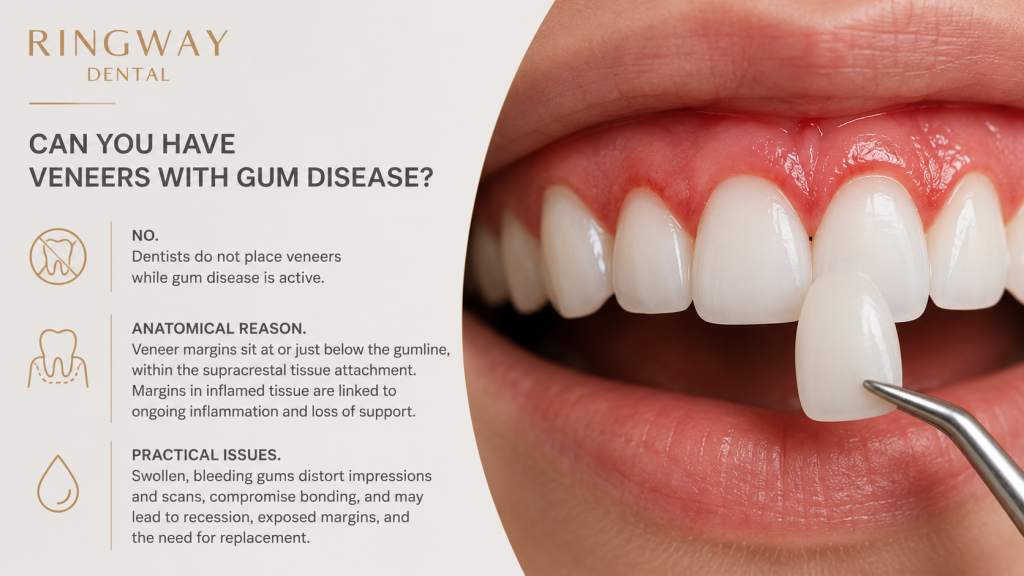
No, dentists do not place veneers while gum disease is active. Your gums must be treated and stable first. Gingivitis typically delays veneers by a few weeks, while periodontitis may require several months of stabilisation before cosmetic treatment can begin.
The reason is anatomical, not simply a matter of caution. A veneer margin sits at or just below the gumline, within the supracrestal tissue attachment (formerly called the “biologic width”). According to the Jepsen et al. 2017 World Workshop consensus published in the Journal of Clinical Periodontology, restoration margins placed in inflamed tissue are associated with ongoing inflammation and loss of periodontal support. In other words, a veneer fitted onto diseased gums may contribute to further periodontal damage.
There are practical issues too. Swollen, bleeding gums can distort impressions and digital scans, and moisture from inflamed tissue can compromise bonding at the gum margin. If the gumline later recedes, the veneer edge may become exposed, affecting the aesthetic result and potentially requiring replacement.
And with many UK adults affected by gum disease, this applies to far more than an unlucky few.
Gum disease is usually a temporary disqualifier, not a permanent one. That is why dentists insist on healthy gums before cosmetic dentistry.
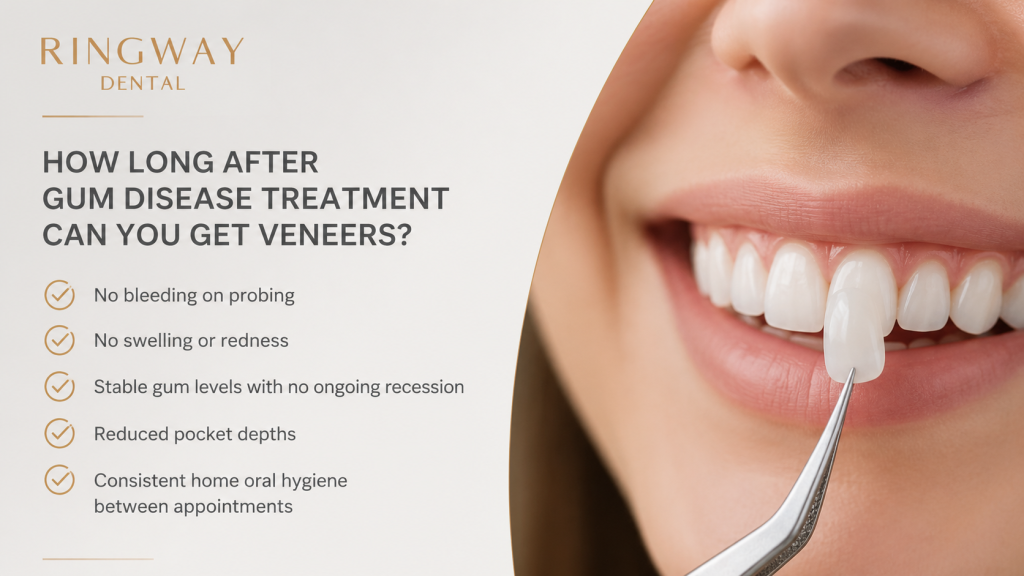
For gingivitis, many patients are ready for veneers within a few weeks of professional hygiene treatment and improved home care. According to the 2017 World Workshop consensus (Heitz-Mayfield & Salvi), gingivitis is reversible once plaque control is re-established. Periodontitis takes longer and may require several months of stabilisation and reassessment before cosmetic treatment begins.
Rather than watching the calendar, dentists check specific readiness criteria:
Smoking is a further factor because the same World Workshop classifies it as a major modifier of periodontitis. Your dentist will address it before cosmetic treatment, as a habit that damages the gums may also shorten the lifespan of veneers.
The typical sequence in UK practice is: gum assessment, followed by hygiene or periodontal therapy, reassessment, and finally smile design and veneer planning. Consequently, a first consultation rarely ends with impressions; it usually marks the start of the treatment pathway. This approach helps protect your investment, as veneers fitted on stable gums are more likely to keep their margins hidden over time.
Yes, veneers can mask the aesthetic effects of past gum recession, including longer-looking teeth and black triangles between them, once your gums are healthy and the recession has stabilised. However, veneers address the cosmetic appearance; they do not treat gum recession itself.
Timing is critical here. Active gum disease can lead to gum recession, so a gumline that is still changing may pull away from the veneer margin after fitting. According to the 2017 World Workshop findings on gingival recession, this may leave an exposed edge or visible dark line over time.
Recession also carries consequences beyond appearance. Exposed root surfaces can cause sensitivity, increase the risk of root decay, and develop notched lesions near the gumline. Gum grafting can repair recession in suitable cases, while periodontal and hygiene treatment can help prevent further progression.
And gum disease is not the only cause. Aggressive brushing and bruxism (teeth grinding) can also contribute to gum recession, so your dentist will address the underlying cause first. These gum health tips can help protect your gums long before veneers are planned.
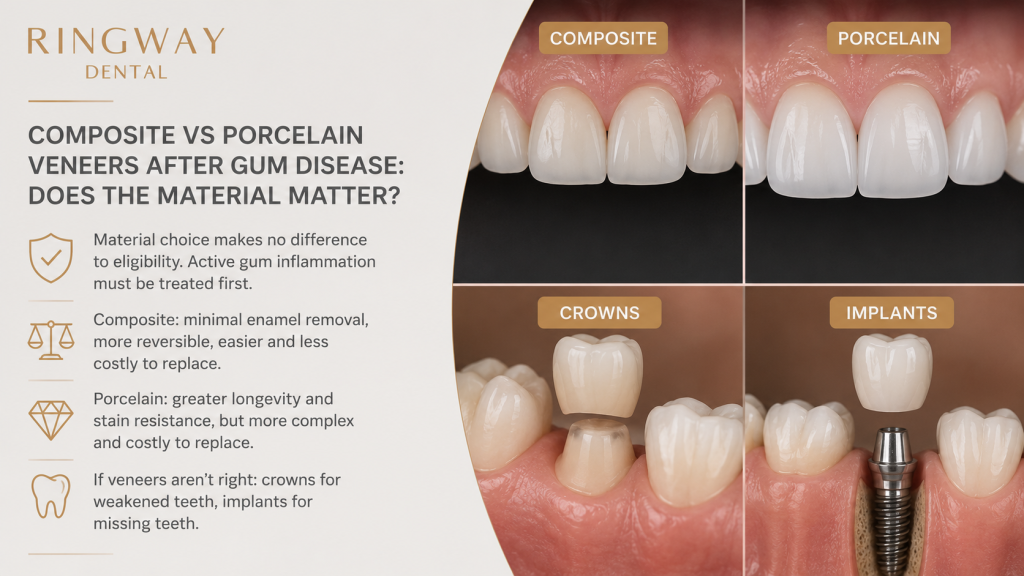
Material choice makes no difference to eligibility: neither composite nor porcelain veneers, including E-max, should be bonded to teeth with active gum inflammation. What the material changes is your treatment plan after gum therapy, not your eligibility.
For patients with a history of gum disease, the trade-offs are practical. Composite veneers typically require minimal or no enamel removal and are generally less expensive to adjust or replace if gum levels shift slightly over time, making them a more reversible option. Porcelain veneers generally offer greater longevity and stain resistance, but replacing them if the gumline changes can be more complex and costly.
Once the gums are well stabilised, porcelain veneers remain an excellent long-term option. You can read more about porcelain veneers treatment to compare it with composite veneers for your individual case.
Sometimes neither veneer type is the right solution. Where periodontitis has structurally weakened teeth, crowns may be recommended instead because they provide full-coverage protection. For missing teeth, implants—not veneers—are typically the appropriate treatment. Both options also require stabilised gums first.
At Ringway Dental, hygiene treatment, gum therapy, and both veneer options are available under one roof, allowing treatment to be planned and coordinated in one place.
Active gum disease, untreated tooth decay, insufficient enamel for bonding, severe bruxism without a nightguard plan, and very loose teeth due to advanced bone loss are among the main reasons veneers may not be recommended.
However, most of these are treatable conditions rather than permanent barriers. Decay can be treated, gums can be stabilised, and bruxism can be managed with a nightguard. In practice, “no” often means “not yet” rather than “never.”
Untreated gingivitis can progress to periodontitis, which damages the bone supporting your teeth and can lead to gum recession and, in severe cases, tooth loss. Any veneers placed in the meantime are more likely to fail prematurely because of poor fit, compromised bonding at the gum margin, and exposed edges if the gumline changes.
And periodontitis often progresses painlessly for years, so it should not be left untreated.
No, the same rule applies as with veneers. Composite bonding requires healthy, non-inflamed gums because the material must bond properly at the gum margin, and bleeding tissue can compromise the bonding process.
Once gum treatment is complete, however, bonding can be a more affordable and reversible cosmetic option than veneers, as it typically involves little or no enamel removal. That may make it a suitable first choice for some patients.
No, both require treated, stable gums first. However, crowns may be preferred over veneers when periodontitis has structurally weakened teeth, as they provide full-coverage protection and additional support.
Implants are an option when teeth have already been lost, but they require stabilised gum disease and adequate bone volume. Smoking status also matters because it can impair healing around implants and is associated with a higher risk of periodontitis.
Healthy gums first, beautiful veneers second: that order helps protect both your investment and your smile over the long term. At Ringway Dental, the team led by Dr Stephen Dodd thoroughly assesses your gum health before any cosmetic treatment begins, so any inflammation can be treated and stabilised before your veneers are planned.
If you’re unsure about the health of your gums, a free online consultation is a simple way to find out. Get in touch and let us help build your new smile on the strongest possible foundation.