

Composite bonding vs crowns: which is right for you?
- Home
- /
- Blog
- /
- Composite Bonding
- /
- Composite bonding vs crowns: which is right for you?


Modern dentistry means there’s more than one way to get a better smile. Some treatments are all about the small cosmetic tweaks, while with others, it’s about protecting and rebuilding a tooth.
Two of the most common options for teeth improvement are composite bonding and dental crowns. Although they can both improve how teeth look, they’re generally used for different reasons. Deciding what’s right for you depends on what your teeth need.
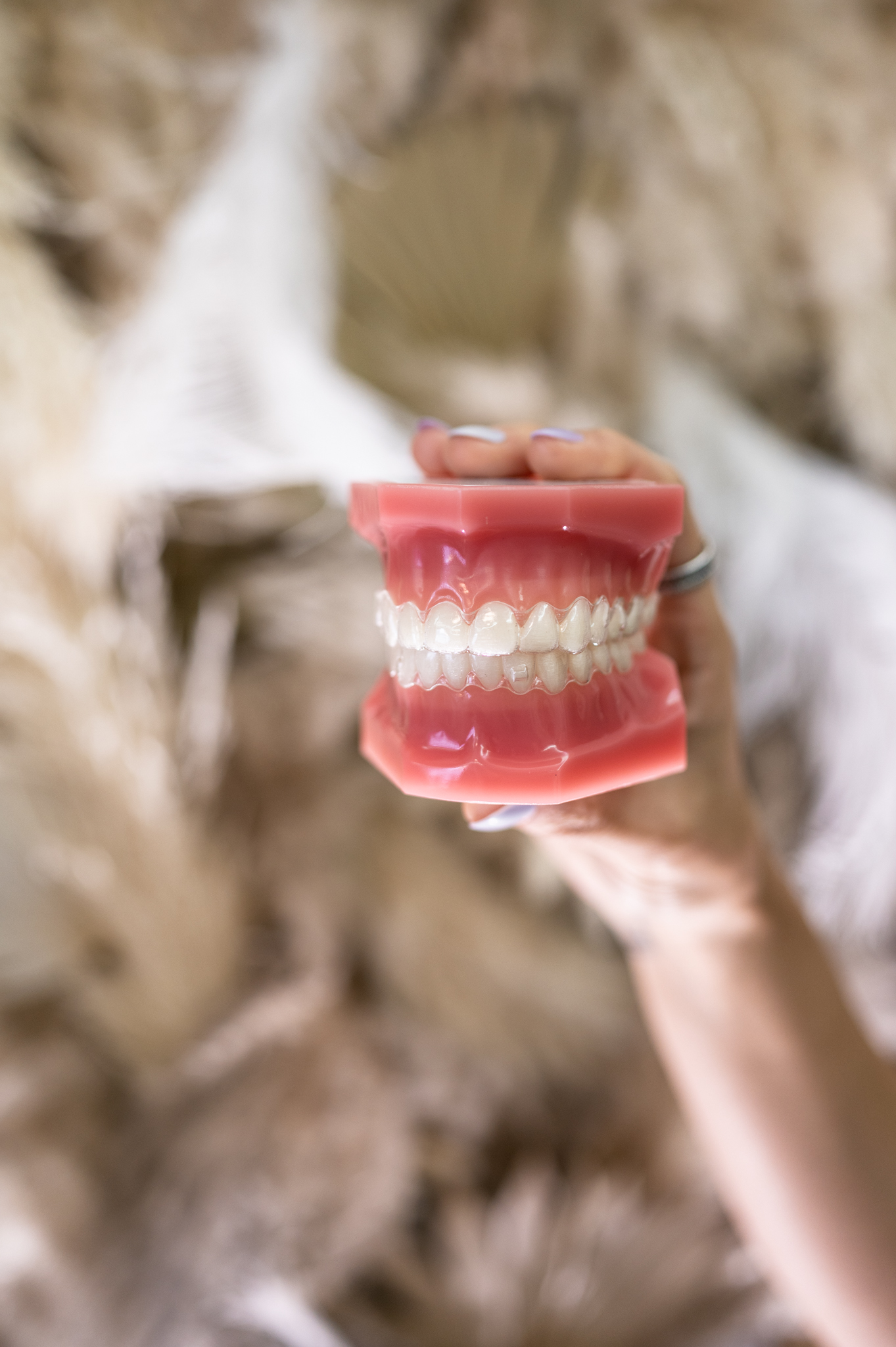
Composite bonding is a simple treatment. It’s minimally invasive and very little (if any at all) of the natural tooth is altered. Most people do not need injections or drilling in the process.
Bonding uses a tooth-coloured resin. This is applied, shaped and polished to improve appearance.
It’s used for:
Generally speaking, it’s a quick way to make subtle improvements to your teeth without major treatment.
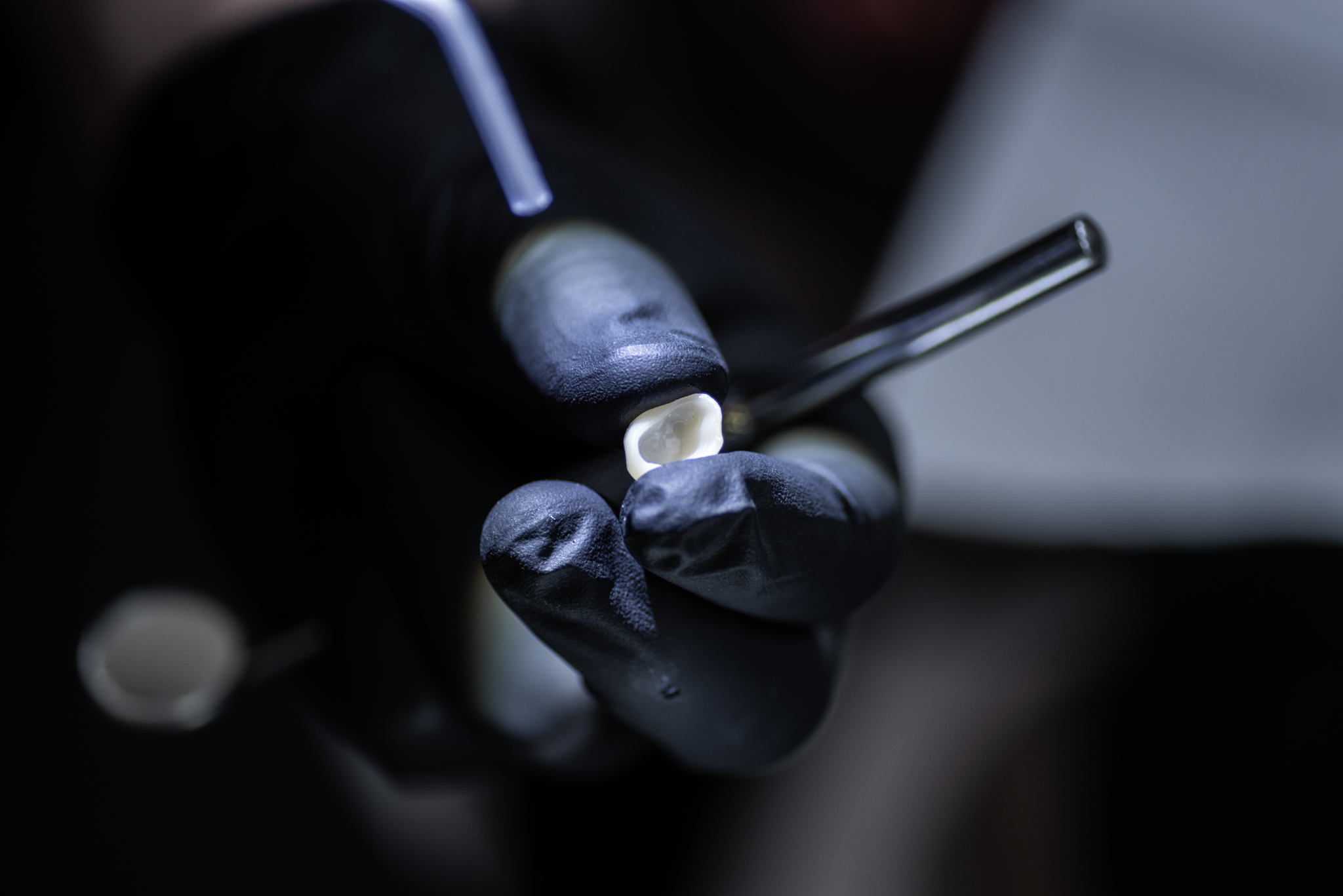
Crowns differ from bonding because they cover the whole tooth. They’re used when a tooth needs fixing – and not just cosmetically. Crowns are like custom-made caps and are used when:
A crown restores both the strength and shape of your tooth. It protects underneath and helps you regain normal again.
It’s worth comparing the difference between the two treatments together to understand which option is best for each case.
The difference in purpose is quite clear-cut.
Bonding may be enough for a tooth that’s otherwise healthy. If it’s weakened, a crown is usually the better option.
There’s a noticeable gap in lifespan between the two.
That said, it doesn’t mean bonding isn’t effective. It just may need more maintenance over time.
Both options can look very natural.
Crowns can give a slightly more refined finish in complex cases.
The experience of getting crowns and bonding is pretty different.
One visit to your dentist is usually enough for composite bonding. During the appointment:
Discomfort is minimal. Most people don’t have any pain or injections.
These typically take two visits:
It’s a more involved process. However, this is necessary for stronger support.
Cost reflects the level of treatment.
Your dentist can guide you based on your needs and budget.
Both options are easy to look after with the right habits.
Crowns are the more durable of the two. But both are best maintained by having good oral hygiene and regular reviews.
There isn’t a one-size-fits-all answer.
For small imperfections, composite bonding is often enough. It’s quick and effective as well as conservative.
If a tooth is damaged, weakened or needs long-term protection, though, a crown is usually the better choice.
Here’s a side-by-side comparison to help:
| Feature | Composite Bonding | Dental Crowns |
| Purpose | Minor cosmetic improvements (chips, gaps, edges) | Structural repair and protection, as well as aesthetics |
| Invasiveness | Minimally invasive, little to no tooth removal | Requires shaping of the tooth |
| Durability | Around 3–7 years | Around 10–15 years or longer |
| Strength | Less resistant to wear, can chip | Strong and durable for everyday use |
| Aesthetic result | Natural-looking, good for small areas | Highly natural, precise colour and shape match |
| Treatment time | Usually one visit | Typically two visits (prep + fitting) |
| Comfort | Usually no injections needed | Local anaesthetic usually required |
| Cost | Lower cost, suitable for small fixes | Higher cost due to complexity and lab work |
| Maintenance | May need repairs or polishing over time | Long-lasting with routine care |
| Best for | Small cosmetic changes | Heavily damaged or weakened teeth |
The best way to decide is to have your teeth assessed properly. A dentist can look at the condition of the tooth, talk through your goals and recommend the most suitable option.
If you’re unsure which route to take, book a consultation with the team at Ringway Dental. You’ll get clear advice and a plan that fits your smile.


Home really is where the heart is.
If you found us for your smile, we see you 🥰
.
.
.
.
#ringwaydental #home #dentist #dentistmanchester #newsmile
This is one of those transformations that makes you stop scrolling… 😍
From discoloured teeth and old crowns to this 😮💨 Porcelain veneers have really brightened her smile and given it a new lease of life.
We love what we see 🔥
Ready for your own smile upgrade? Your journey starts here… 😉
🦷 @drclairespencer
📍 @ringwaydental Cheadle
📍 @ringwaydental Altrincham
.
.
.
.
#porcelainveneers #smiletransformationmanchester #dentistmanchester #porcelainveneersmanchester #bestdentistmanchester
Do you know that feeling? We can tell you do 😉
All those smiles you’ve been hitting the save button on, then one day, they finally make it out of the folder.
That day when a new smile is actually yours…is there any better feeling?! 😍
Can we help turn your vision into reality? Tap the link in our bio to book a consultation direct from the comfort of your couch, DM us or call.
📍 Cheadle
📍 Altrincham
.
.
.
.
#dreamsmile #cosmeticdentistmanchester #smilemakeovers #dentistmanchester #compositebondingmanchester
This is the kind of excitement we expect when you see @drstephendodd or any of our @ringwaydental dentists… 😭🤗🦷
Basically, we’re your very own American Girl Doll Mias 💅🏻✨😂 @jessiereneewynter
.
.
.
.
#ringwaydental #jessiewynter #influencer #loveisland #content
The magic of dental implants and paper thin porcelain veneers… 🪄😮💨
Rachel wanted to disguise the gap in her smile and refresh the rest of it. We first placed dental implants to give her a more permanent solution to her missing tooth 👌🏻
Combine these with our RD porcelain veneers and WOW, we have a smile that really has presence 🔥 🚀
So much so, Rachel said she felt as if she could cry when she met her new smile for the first time. And that’s the kind of reaction we love 🫶🏻
If you love this smile as much as we do, go show it some love 🤎
And if you’re ready to start your own smile makeover journey, we’d love to welcome you to either 1 of our practices in. DM us or call the practice - see you soon? 👀
🦷 @drstephendodd
📍 @ringwaydental Cheadle
📍 @ringwaydental Altrincham
.
.
.
.
#feldspathicporcelain #dentalimplants #dentalimplantsmanchester #dentistnearme #cosmeticdentistmanchester
Looking for a dentist who just gets your idea of a good smile? 👀 We think you should meet our cosmetic dentist @drclaireandrews 🦷✨
An award-winning cosmetic dentist, recognised for her excellence in composite bonding and known for creating some absolutely show-stopping smiles…just look ⬆️!
Enjoy scrolling through and seeing Dr Andrews’ eye for detail and amazing skill in this @ringwaydental Look Book 👌🏻
If you like what you see, you can book a consultation direct with Dr Andrews via the link in our bio 👊🏻
.
.
.
.
#ringwaydental #manchesterdentist #beforeandaftersmile #cosmeticdentistry #compositebondingmanchester
POV you’re an Invisalign patient and someone offers you a snack 😭🫠
Do I want it? Absolutely.
Do I want to take my Invisalign out, brush my teeth and put them back in for it? …not that badly 😂 Who feels us?!
The things we do for our smile hey, @florencegracee_ 🦷 We can’t wait to see your straightening progress!
Anyone else in their @invisalign_uk era? Shout up 🙋🏼♂️
.
.
.
.
#invisalign #invisalignjourney #invisalignlife #smilejourney #invisalignmanchester
That close-up shot though 😮💨🔥 From old composite veneers to ultra-thin Ringway porcelain veneers.
@scottshashua wanted porcelain veneers that looked and felt like natural teeth, not porcelain. We think we hit the brief 👌🏻
Our porcelain veneers are as thin as a contact lens. They’re not bulky and they’re not perfect either - but that’s exactly what makes them look and feel natural.
@thecoutureclub is suddenly even brighter with x2 RD smiles lighting up HQ. And we love to see it.
A good smile like this never goes out of fashion 😉
Ready for your own smile makeover? DM us or give us a call to find out how we can help 📞
📍 Altrincham
📍 Cheadle
.
.
.
.
#naturalsmilemakeover #coutureclub #dentistmanchester #porcelainveneers #porcelainveneersmanchester